
You know the day.
A no-cool call. The system's low — the gauges tell you that much. So there's a leak. Somewhere.
You start on the coil. Nothing. You run the line set. Nothing. You pull the top, work the probe into the cabinet, and wait for it to say something. Maybe it screams. Maybe it screams the second you get near the coil — but it turns out that was the coil cleaner you sprayed, not refrigerant. Maybe it says nothing at all, and you have no idea if that means no leak here or this thing just isn't picking it up.
An hour in. Two. The customer's in the doorway now, arms crossed, watching you not find it.
Or here's the worse version. You do find something. You charge it, you pack up, you move on to the next call feeling good about the day. And two weeks later your phone rings and it's the same address. Same complaint. The refrigerant you put in has already bled back out — because whatever you found, it wasn't the leak. Now you're driving back across town on your own dime, on a job you already "fixed," to look for something you couldn't find the first time.
That's a callback. In this trade it's the dirtiest word there is. Every one of them costs you the drive, the hour, and a little piece of your name.

Nobody adds it up, but it's real money: a couple hundred bucks in windshield time per comeback, refrigerant poured into systems just to hunt for the leak, whole afternoons swallowed by one bad diagnosis, and every so often an account that quietly stops calling because they found somebody they trust more.
And the part that eats at you most isn't even the money. It's standing there in front of a customer, tool in hand, unable to say for sure where the leak is — and wondering, just for a second, if you've lost a step.
You haven't. Let me tell you what's actually going on.
It's Not You. It's the Tool Lying to You.
Here's what almost nobody says out loud: most of the time you can't find the leak, it isn't a skill problem. It's that the detector in your hand can't be trusted — and a detector you can't trust is worse than no detector at all, because it sends you the wrong way with total confidence.
There are three ways these tools go blind on you, and you've probably met all three.
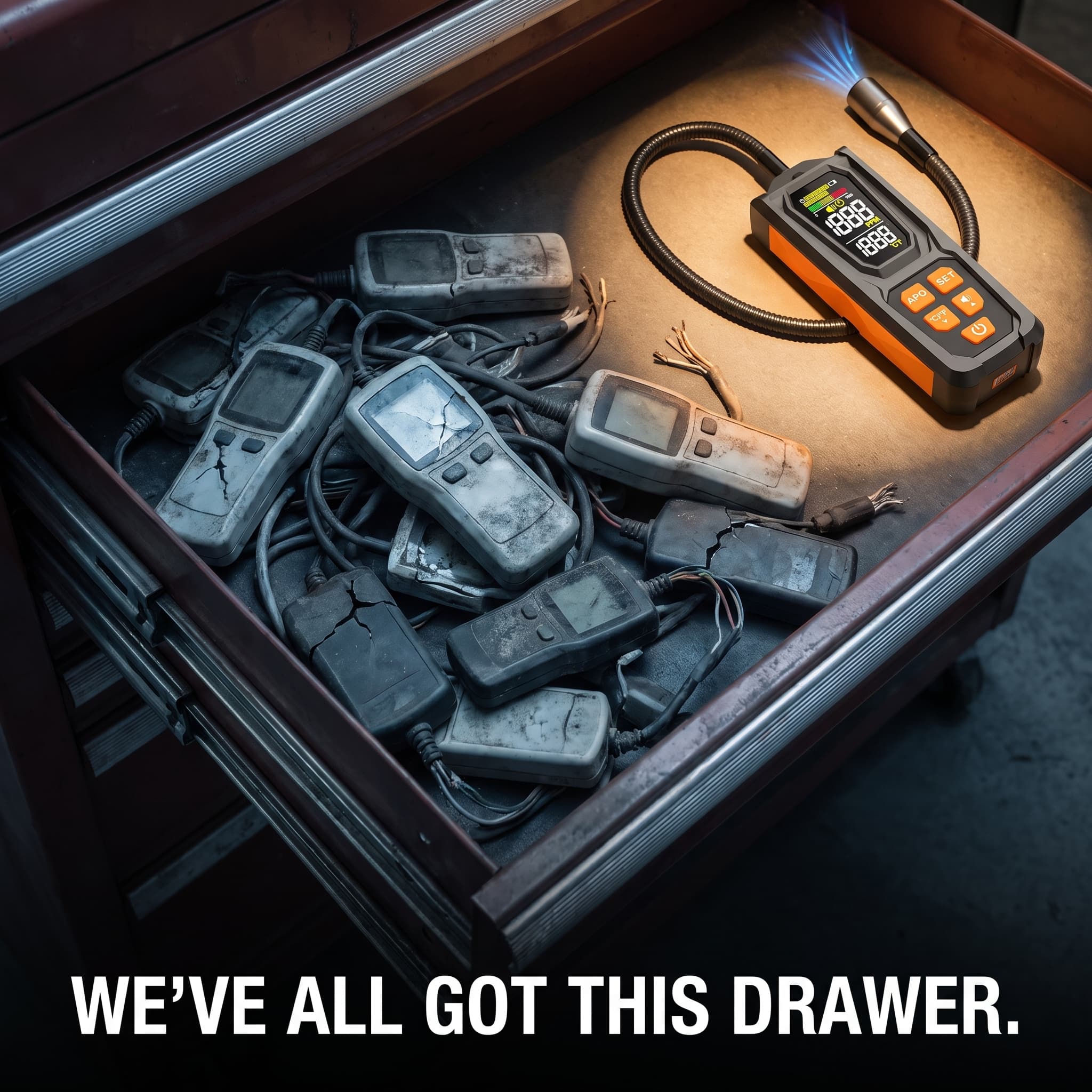
The leak that's killing the system is often a micro-leak — a slow weep at an O-ring, a pinhole in a fin pack — bleeding out over weeks, well below what soap bubbles or a tired sensor will ever catch. The detector sweeps right over it and stays quiet. You walk away thinking there's nothing there. There is. It's just smaller than your tool can see.
The opposite problem, and just as bad. It fires on cleaner residue, on PAG oil, on whatever's in the air in a cramped mechanical room or under a hood. It cries wolf so many times that you stop believing it — and the one time it's finally telling the truth, you wave it off and move on. A detector that alarms on everything is really telling you nothing.
Reads strong one minute, dead the next. Bump the probe and it false-triggers. Leave it a season and the sensitivity drifts, or the sensor just dies mid-summer and a replacement costs damn near what you paid for the whole unit. You never actually know where you stand with it, so you never fully trust the beep — and if you can't trust the beep, what are you even holding it for?
That's the real problem. Not your eyes, not your hands, not your years in the trade. A sensor that's too dull to catch the small ones, too twitchy to believe, or too flaky to count on. You're not losing your touch. Your tool is lying to you — and you've been blaming yourself for it.
What a Detector You Can't Trust Really Costs You
Once you see it, you can't unsee it. A leak detector you can't believe doesn't just cost you the occasional missed leak. It taxes every job you take, quietly, all season long:

- Callbacks you eat yourself — the drive, the hour, and the hit to your reputation, every time a "fixed" leak comes back.
- Refrigerant poured down a hole — charging systems just to hunt, on gas that keeps getting pricier and harder to get.
- Afternoons you'll never bill — leak searches that stretch from twenty minutes into half a day.
- Fewer calls, later nights — every hour lost to one leak is a call you didn't run and a dinner you missed.
- The customer watching you guess — nothing chips at a pro's standing faster than not being able to say, for sure, where the problem is.
- Second-guessing your own "no" — when a quiet detector might just mean a weak detector, you can never fully close a call with confidence.
Add a season of that up and the cheap detector in your bag isn't cheap. It's the most expensive tool you own.
Somewhere, There's a Tech Who Never Deals With Any of This
Think about the guy who's been doing this thirty years and swears by the detector on his hip. Ask him about it and you'll hear some version of the same line:
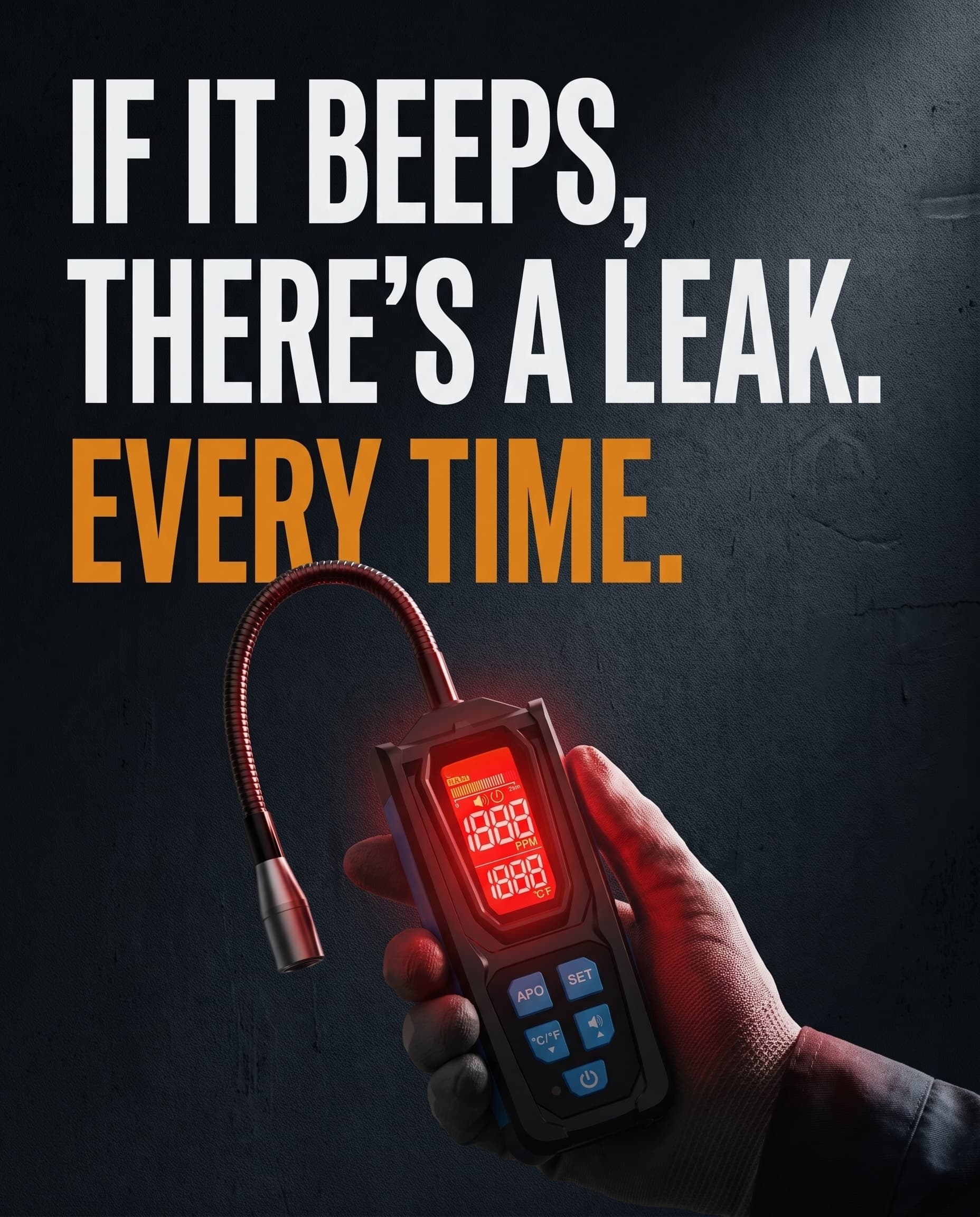
That's it. That's the whole thing. He's not smarter than you. He's not luckier. He just has a tool he can believe — so when it's quiet, he trusts the quiet, and when it alarms, he trusts the alarm. No chasing ghosts. No second-guessing. He finds it, he fixes it once, he moves on to the next call.
That's the difference between a detector you fight and a detector you trust. One turns every leak search into a coin flip. The other turns it into a two-minute job.
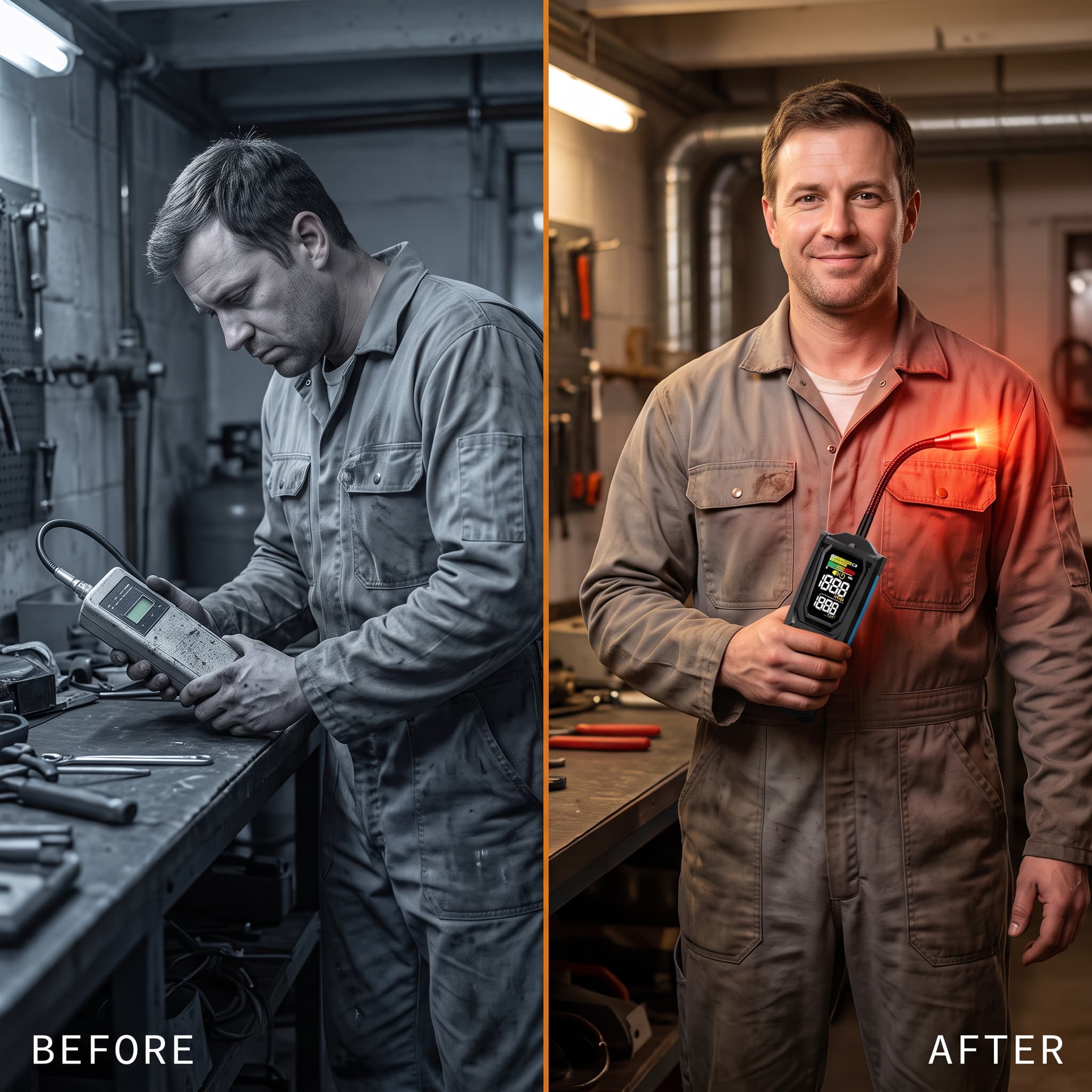
So the real question was never "how do I get better at finding leaks?" You're already good enough. The question is: why should a tool you can trust cost $700 or $900?
Because that's the trap. On one side you've got the pro units — the D-TEKs, the H-10s — that genuinely work but cost more than a lot of techs want to sink into a single tool, with sensors that burn out and cost a small fortune to replace. On the other side you've got a wall of $20 and $40 sniffers that look the part and let you down on the first real call.
For years, that was the whole choice. Overpay, or gamble.
It isn't anymore. And what changed the math is a lot simpler than the price tag makes it look…
The Fix Isn't a Better Technician. It's a Detector Built Around One Job: Being Right.
Here's what changed the math.
A leak detector fails you in three ways — too dull, too twitchy, too flaky. So the fix isn't a longer probe or a louder beep or a bigger number on the box. The fix is a detector engineered to close all three gaps at once, so that when it speaks, you can take it to the bank.
That's the whole idea behind Vavren's Triple-Lock Detection.
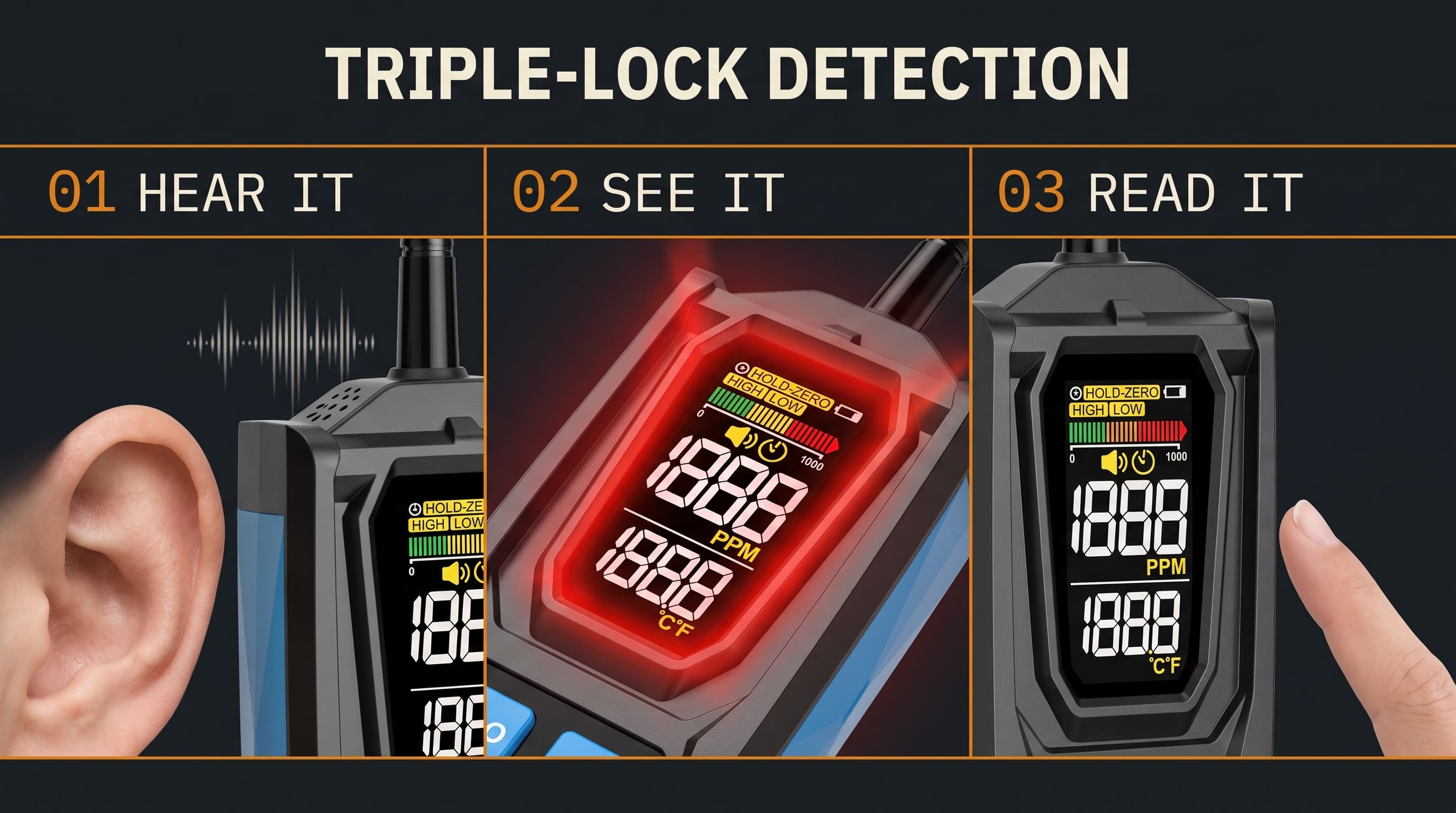
Most detectors give you one signal — a beep — and ask you to trust it. Vavren confirms a hit three ways at the same time:
The tone climbs as you get closer to the source, so you're not just told "somewhere here" — you're walked straight to the exact spot.
The screen backlight turns red the instant it locks on. Even in a dark attic, a dim crawlspace, or under a hood at dusk, you get the signal without staring at a tiny readout.
An on-screen bar grows with the concentration. A real leak drives the bar up and holds it. A stray whiff of cleaner blips and falls back. One glance tells you the difference between refrigerant and noise.
That's the difference between a beep you can miss and a signal you can't. You hear it, you see it in a dark cabinet, and the bar tells you the one thing that matters: whether it's a real leak holding steady, or just a passing whiff. No more staring at a tiny readout wondering if that blip meant anything. When Vavren locks on, you know.
Then it hands you the two controls the cheap units never do:
1 PPM resolution and sensitivity down to 0.5 oz/yr. Crank it up to chase a slow leak, or dial it down to cut through a contaminated engine bay without drowning in false alarms.
Reset it to the air you're actually standing in, so the junk in the room becomes the baseline and only a real rise trips it.
Dull, twitchy, flaky. Triple-Lock Detection is the answer to all three — a high-precision halogen sensor built so the beep means something again.
- 1 PPMResolution
- 0–1000 PPMDetection range
- 0.5 oz/yrMax sensitivity (14 g/yr)
- 30 secWarm-up
- <10 secResponse time
- 270 mmFlexible gooseneck
It Reaches the Leaks You Can't Get To
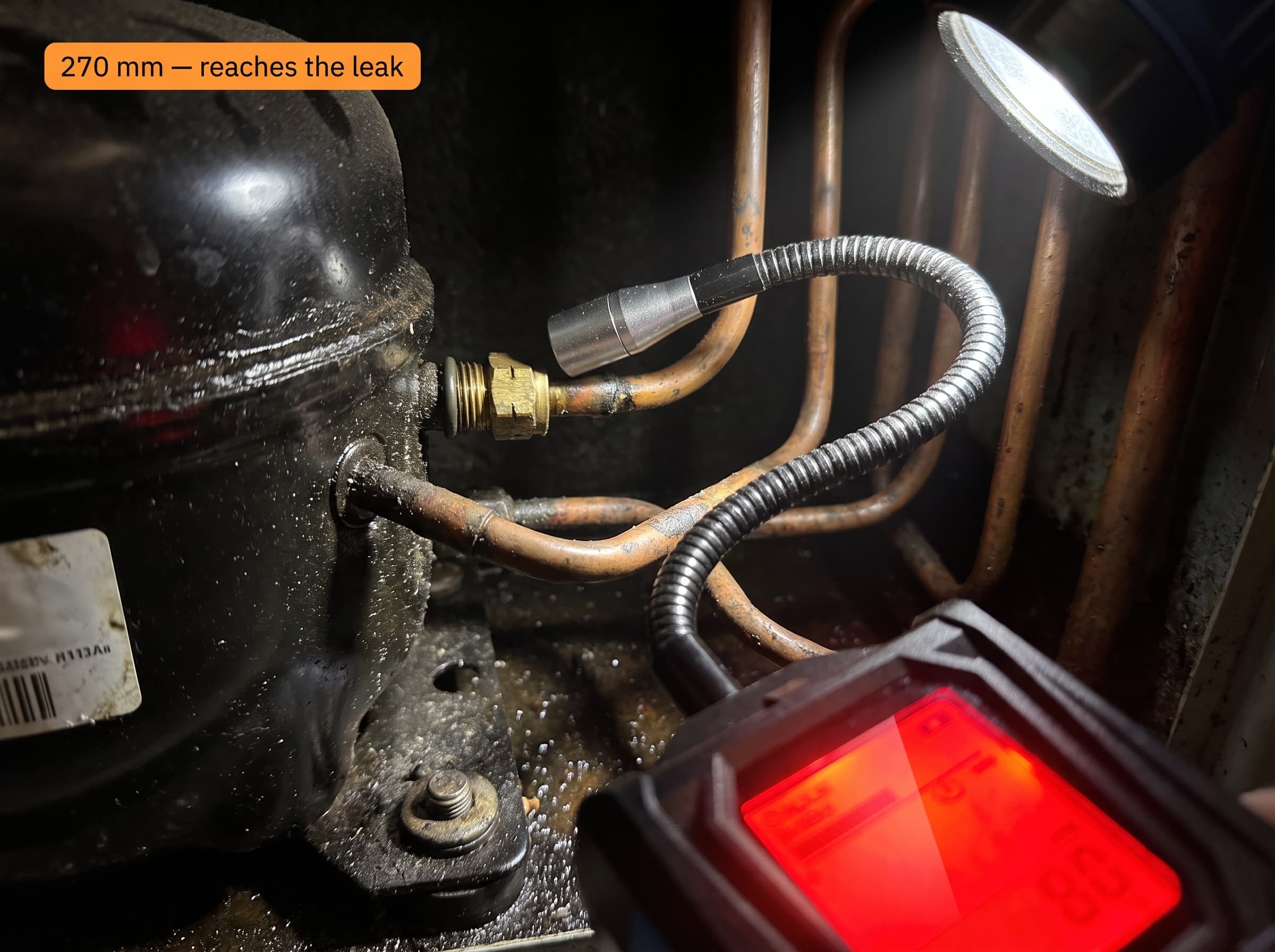
The worst leaks are always in the worst spots — behind the compressor, up under the dash, deep in the evap coil, tucked inside a cramped cabinet where your hand won't go.
Vavren's 270 mm flexible gooseneck probe bends and holds its shape, so you can snake the tip exactly where the refrigerant is hiding and leave it there. No contorting. No "I think it's back there somewhere." You put the sensor on the leak, and Triple-Lock does the rest.
Always Charged. Always Ready.
A detector that's flat when you reach for it is just dead weight in the bag.
Vavren runs on a built-in 1000 mAh lithium battery and charges over USB-C — top it off from the truck, a power bank, or a laptop between calls, the same cable that charges everything else you own. No hunting for the oddball batteries the old sniffers eat through. A clear battery readout means you're never caught out mid-search. It's ready when you are, on the call when you need it.
Reads the Refrigerants You Actually Work On
You don't service one refrigerant, so your detector shouldn't read just one. Vavren senses halogen refrigerants across the systems you touch every day — the CFCs, HCFCs and HFCs, including R-22, R-134a, R-410A, R-404A, R-407C and R-32. From a legacy R-22 condenser to a modern R-32 mini-split to R-134a under the hood, it's one detector for the whole route.

Here's Where the Price Stops Making Sense — for the Other Guys
For years the choice was overpay or gamble. Look at what the market actually asks you to do:
| Your options | What it runs you |
|---|---|
| Pro-grade detector (D-TEK, H-10, etc.) | $400–$900 |
| Replacement sensor when a pro unit burns out | $150–$200 |
| One callback on a leak you couldn't find | $250–$400 |
| A season of refrigerant poured in just to hunt | adds up fast |
| $20–$40 generic sniffer | cheap — until it fails |
| Vavren — Triple-Lock Detection | $159 $99 |
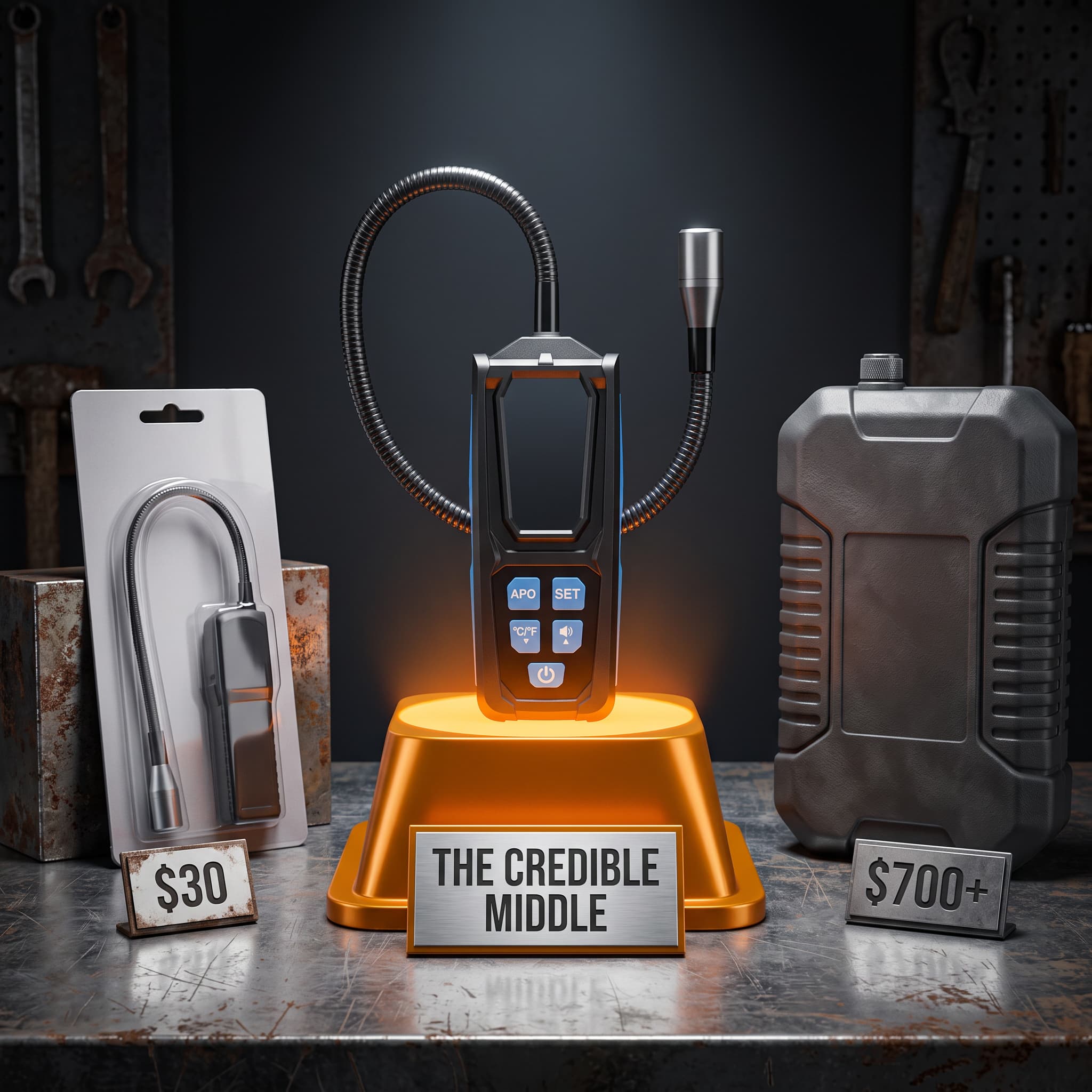
That's the point. Vavren isn't the $30 gamble and it isn't the $900 splurge. It's the credible middle — a detector you can actually trust, at a price that doesn't make you think twice.
Run the math the way you'd run it on a job: it pays for itself the first callback it saves you. Everything after that is time you keep, refrigerant you don't waste, and a customer who never sees you guess.

$159 $99 Save $60
60-day money-back guarantee · Free U.S. shipping
You Won't Find a Wall of Fake Reviews Here
Vavren is a newer name — and this trade has seen enough invented five-star ratings to know they aren't worth much. So instead of a testimonial wall, we'll give you the only proof that counts on a real job:
Put it on your own systems. Sweep the leaks you already know are there. If the beep doesn't earn its spot on your hip, send it back.
Try It on Your Own Systems — the Risk Is on Us
You shouldn't have to take an unknown brand's word for it. So don't.
Put Vavren on the systems you already know are leaking. Sweep the fittings you've chased before. Test it against the tool in your bag right now. If it doesn't earn a spot on your hip — if the beep doesn't mean something every single time — send it back.
60-Day Money-Back Guarantee · No forms · No hassleThat's how sure we are that once you hold a detector you can trust, you won't go back to guessing.
Stop Guessing. Start Finding.
You were never the problem. The tool was.
A detector whose every signal you can trust means you find the leak the first time, you kill the callback before it happens, you stop pouring refrigerant into a hole, and you never again stand in front of a customer unsure of your own answer.
Find it fast. Fix it once. Move on to the next call.
$159 $99 Save $60
Backed by a 60-day money-back guarantee. Ships free in the U.S.